
Family Stakes Results and Pedigree Connections
The stakes results table in a mare's detail view lists every stakes performance in her female family, and shows how each horse is related to her. Clicking a row lines the two pedigrees up side by side.
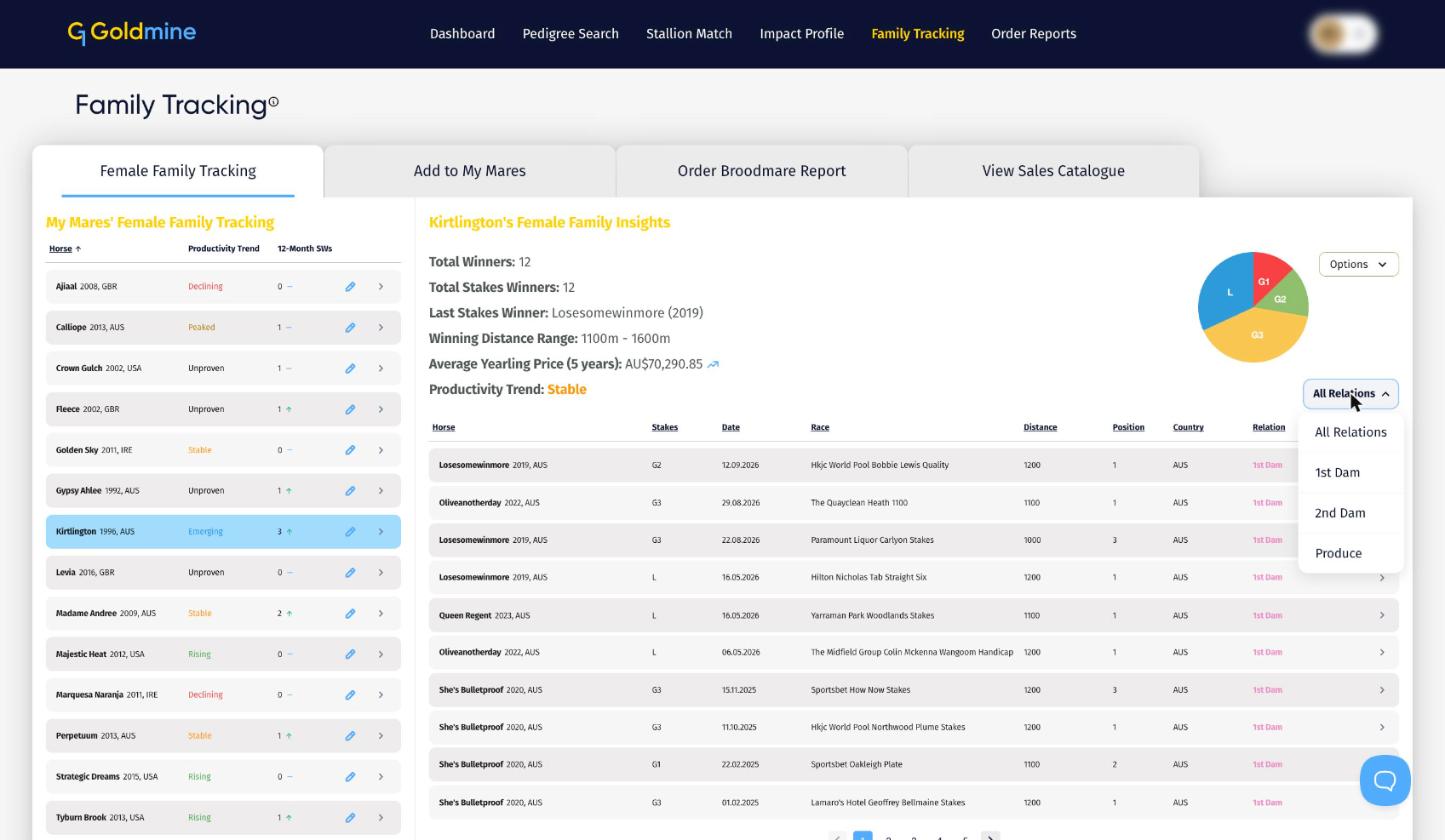
The columns
- Horse: the stakes performer, with year of birth and country.
- Stakes: the level of the race: G1, G2, G3 or L (Listed).
- Date, Race and Distance (in metres).
- Position: where the horse finished. The table includes stakes placings as well as wins.
- Country: where the race was run.
- Relation: how the horse is related to your mare.
The Relation filter
Use the All Relations dropdown to narrow the table:
- Produce: your mare's own foals.
- 1st Dam: horses descending from your mare through her daughters. Your mare is the first dam of this branch of the family.
- 2nd Dam: horses descending from your mare's dam, including her dam herself and your mare's half-siblings and their descendants.
Produce and 1st Dam show what your mare's own branch is producing. 2nd Dam shows the wider family she comes from.
Comparing pedigrees
Click any row to open your mare's pedigree, under Your Broodmare, next to the stakes winner's, under Stakes Winner Pedigree Update. Matching ancestors within four generations are highlighted on both sides:
- Orange: the female line connecting your mare to the stakes winner.
- Dark green: an ancestor in exactly the same position in both pedigrees.
- Light green: an ancestor in the same half of both pedigrees, in a different position.
Click Legend for the key.
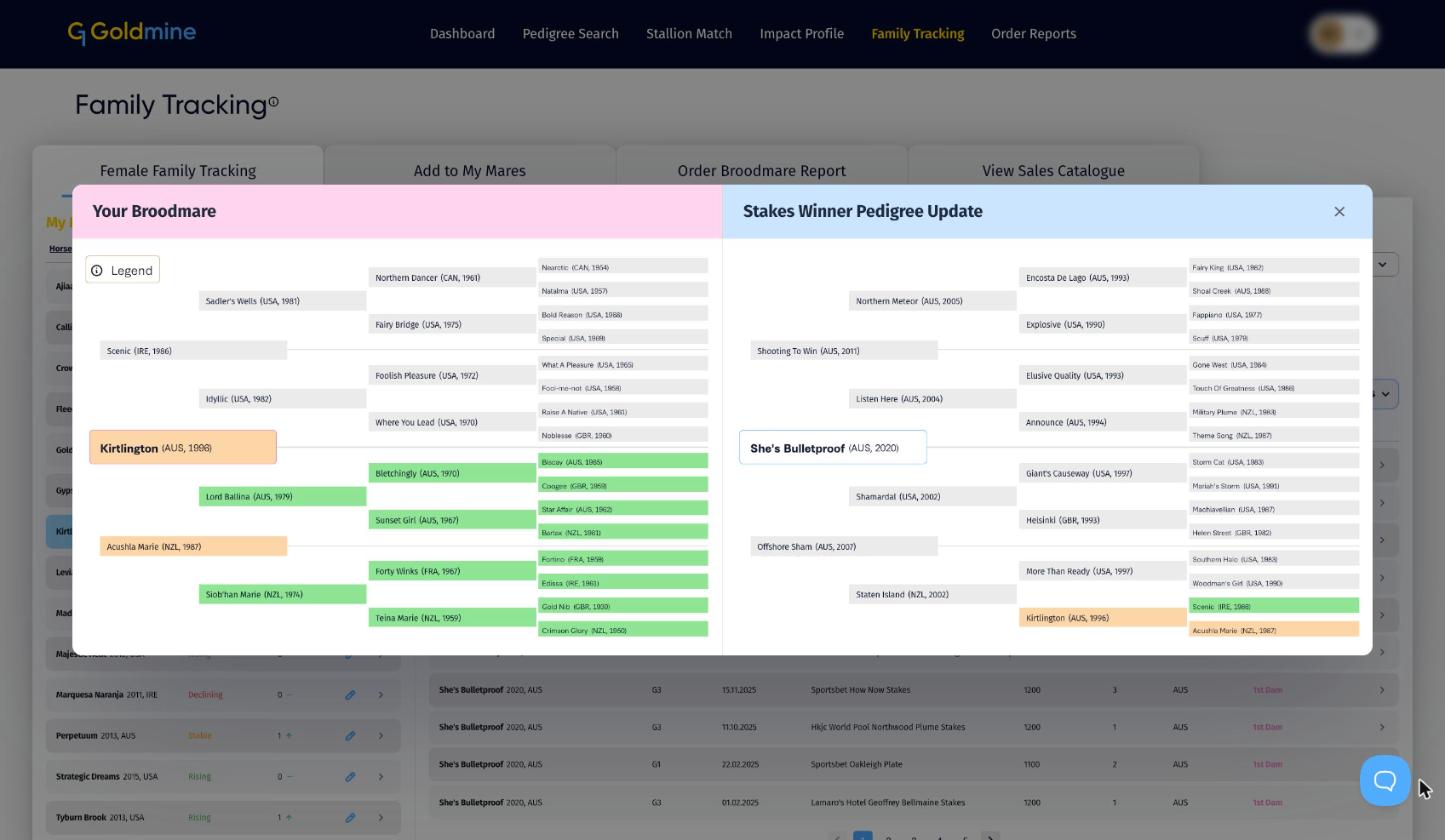
In this example, She's Bulletproof descends from Kirtlington through her daughter Staten Island and granddaughter Offshore Sham. The orange shading traces that line, and the light green shows the other ancestors the two pedigrees share.
Reading it
The comparison shows more than the family connection. The more green the two pedigrees share, the more closely the stakes winner's pedigree resembles your mare's beyond the female line. That can point to sires that already appear in successful branches of the family. Test them in Stallion Match or the Impact Profile before treating them as a pattern.